WHITI, The 10th Indigenous Art Gathering 2026
Nā ngā kaituhituhi Maree Mills (Ngāti Tūwharetoa, Te Arawa, Clan Gunn) rāua ko Gina Tawhai Matchitt (Te Arawa, Whakatōhea)
Introduction
Gisborne, renowned for its spectacular coastline and rich cultural heritage, recently played host to the much-anticipated 10th Indigenous Art Gathering. This landmark event brought together Māori artists from across Aotearoa and international indigenous communities abroad, transforming Tūranga-nui-a-Kiwa into a vibrant hub of creativity.
As Te Ātinga, the visual arts arm of Toi Māori Aotearoa marks this significant occasion, we delve into the heart of The Gathering, highlighting its whakapapa, artistic achievements, cultural resonance, and the vision it offers for the future of indigenous art.
Three Decades of Artistic Connection
The Indigenous Art Gathering has grown from humble beginnings to become one of the most important platforms for Māori and indigenous artists in New Zealand. What makes the Gathering different is the deliberate focus on relationships and connectivity across indigenous art forms and creative practices.
The first Indigenous Art Gathering was held at Apumoana Marae Rotorua in 1995, which brought in artists from all around the world, ‘gathering’ to make new work and exchange knowledge over several days. Since then, different indigenous nations have reciprocated by hosting the event themselves. In 2001 The Gathering was held at Evergreen State College in Washington State USA, before returning to Gisborne in 2002 and 2005. In 2007 the Keomailani Hanapi Foundation, in Waimea Hawai’i hosted before it returned to Aotearoa in 2010, and 2014, then going back offshore to Washington State in 2017.
After the large Gathering at Tūrangawaewae marae in Kirikiriroa Hamilton in 2019, an extended period of global disruption occurred. The Covid 19 pandemic and extreme weather events in Aotearoa such as Cyclone Gabrielle, prevented the opportunity to successfully ‘gather’. These disruptions also had a big impact on our Māori communities.
By 2026, after a period of stability, Te Ātinga saw the opportunity to re-connect with Tūranga-nui-a-Kiwa and support the Māori visual arts school, Toihoukura, to act as a venue again. This reconnection further supported Māori visual artists in the Gisborne/ Tūranga-nui-a-Kiwa rohe or area. Over the years Toihoukura has produced a number of artists that have influenced and shaped the trajectory of Māori visual arts. These tauira or students have been taught by esteemed kaumatua (elders) Tā Derek Lardelli (Rongowhakaata), Steve Gibbs (Ngai Tāmanuhiri, Ngati Rangiwaho, Rongowhakaata, Rongomaiwahine, Ngati Kahungunu), and Sandy Adsett (Ngāti Pahauwera, Ngāti Kahungunu), who later moved to establish Toimairangi art school, associated with Te Wānanga o Aotearoa in Hastings. WHITI the 2026 Gathering gave the students further opportunity to meet leading artists of the same calibre from other indigenous nations.
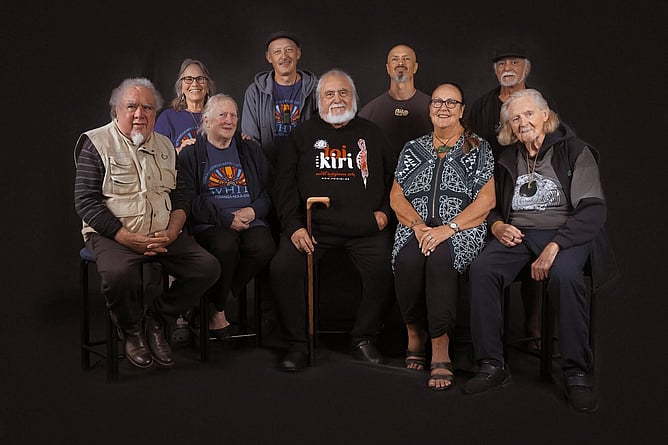
While new connections are made, other relationships have endured over the thirty-year history of the Gathering. Kaumātua Sandy Adsett, Baye Riddell (Ngāti Porou, Te-Whānau-a-Ruataupare), Christina Wirihana (Ngāti Pikiao, Ngāti Maniapoto, Ngāti Raukawa, Ngāti Whawhakia, Tainui, Te Arawa, Ngāti Rangiunora) and Gabrielle Belz (Ngāpuhi, Te Ātiawa) show immense commitment and participate in every Gathering. Regular check-ins with our elders keeps the artists grounded in the kaupapa. June Grant (Te Arawa, Ngāti Tūwharetoa, Tūhourangi, Ngāti Wāhiao) and Wi Taepa (Ngāti Pikiao, Te-Roro-o-Te-Rangi, Te Arawa,Te Ātiawa) both attended the first gathering at Apumoana in 1995, and in 2026 remind us that creative practice has lifelong benefits providing healing, love, identity and whakapapa connections for artists. During the ‘Gathering’ acknowledgement of those artists who have passed occurs. Manos Nathan (Ngāti Whātua, Ngā Puhi, Te Roroa), Colleen Waata Urlich (Ngāti Whātua, Ngā Puhi) Kauanoe Chang from Hawaii and others are fondly recalled and remain integral to the energy and mana of the Gathering.
This tenth iteration was not only a celebration of indigenous art but also of the journey these creators have shared—bridging generations, exchanging expertise in a variety of mediums, and building connection and kinship across indigenous ethnicities.
Preparation and Planning
Each iteration of the Gathering brings changes that have occurred since the previous one. Twelve regional Te Ātinga committee members play a vital role in discussing this and identifying emerging talent, leaders, and kaupapa Māori driven practitioners, who could contribute to the Gathering. Their collective national network also helps determine where the kaupapa for the Gathering moves next. After holding the event at Tūrangawaewae, the rōpū/ group explored options before confirming Gisborne. Alongside the legacy of Toihoukura itself, this site decision was supported by local established high-profile artist and toi advocate Tāwera Tahuri (Ngā Ariki Kaipūtahi, Whakatōhea, Ngāti Uenuku, Tūwharetoa). Her experience as a Creative New Zealand advisor and incredible capacity for relationship building, and deep community connections made Tūranga-nui-a-Kiwa the right place to host again.
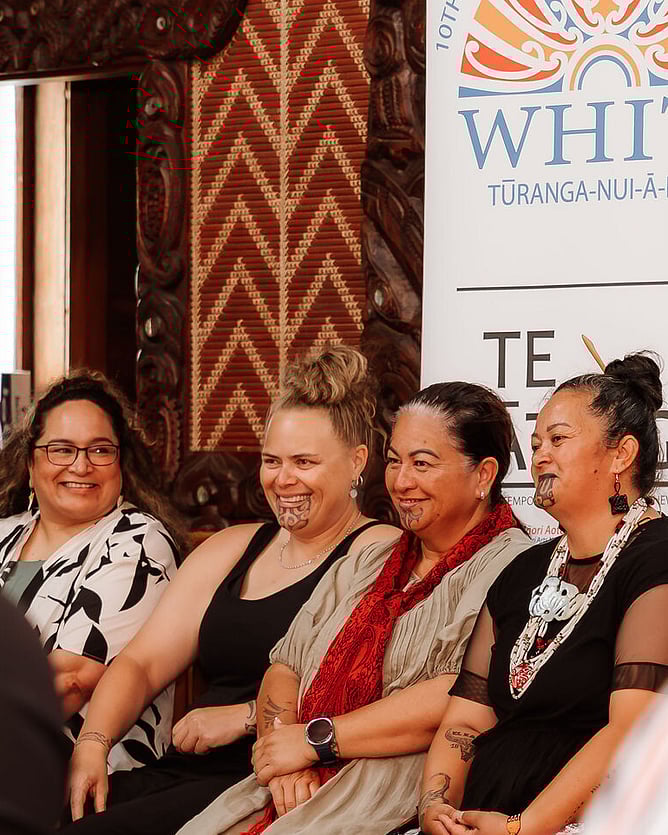
In 2025 planning began in earnest, building on insights provided during a site visit to Tairawhiti in July that year. By then, Te Ātinga co-chairs Margaret Aull (Te Rarawa, Tūwharetoa. Fiji) and Regan Balzer (Te Arawa) with Tawera Tahuri had set many wheels in motion to bring the ‘WHITI’ vision together. This planning required involvement from national stakeholders Toi Māori Aotearoa, and Creative New Zealand, with wider support from the tertiary education sector. Toihoukura, now operating under Eastern Institute of Technology continued to keep space for Māori arts to flourish. As with all Gatherings the support of mana whenua was necessary and the hau kainga of Te Poho-o-Rāwiri Marae stepped up to provide accommodation for the the Gathering in 2026. Holding this event on and connected to the marae reinforces that toi Māori is not disconnected to everyday life—it lives within whakapapa, whenua, and community.
Wānanga and studios – connections and collaborations
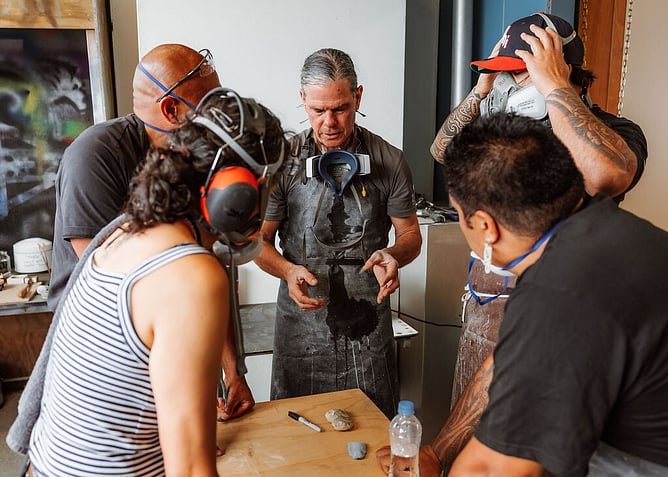
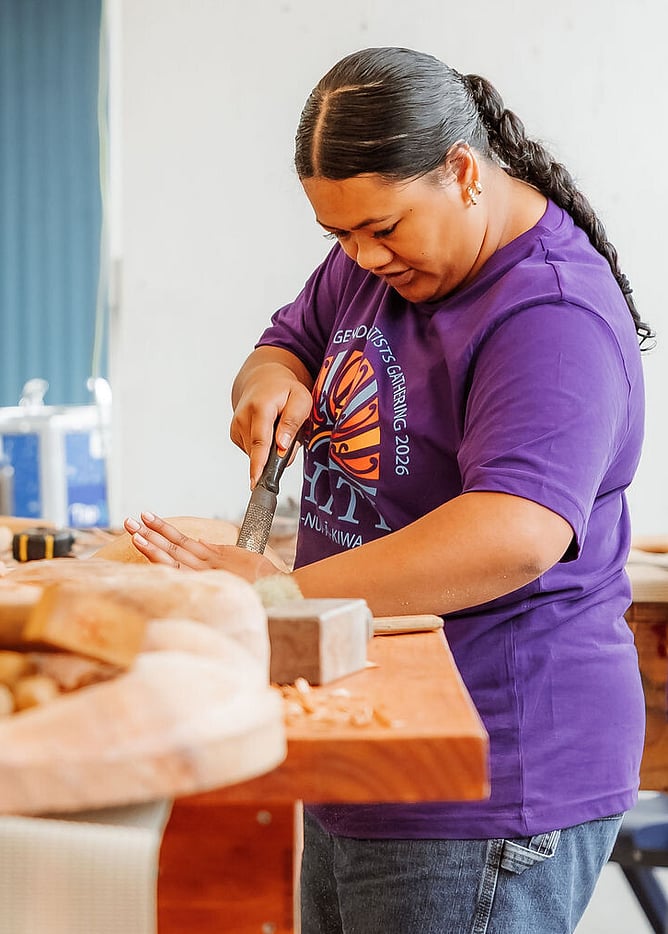
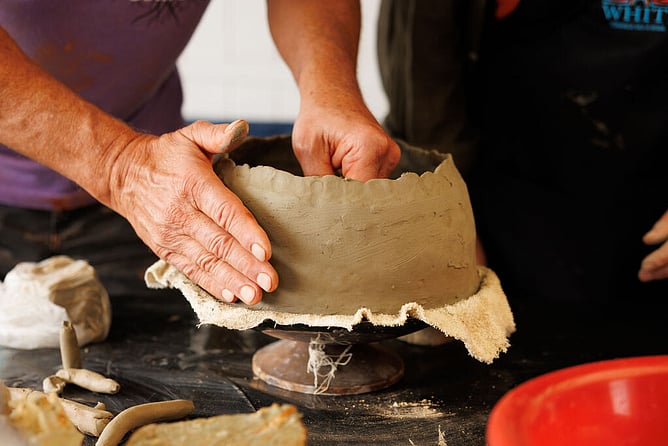
Over the duration of the Gathering, eight studios were set up to provide space for participants to learn new skills, exchange techniques and knowledge and enable cross-pollination across indigenous artistic practice.They included bone, stone, shell, adornment led by Stacey Gordine (Ngāti Porou) and Piri Cowie (Kāi Tahu, Ngāpuhi), jewellery led by Rina Kerekere (Te Aitanga a Hauiti, Ngai Tamanuhiri, Ngati Kahungunu, Rangitane, Ngai Tahu), uku or clay led by Dorothy Waetford (Ngātiwai, Ngāti Hine, Ngāpuhi-nui-tonu), fibre arts led by Bethany Edmunds (Ngāti Kurī Pohotiare/Ngāti Kurī), painting led by Rongomaiaia Te Whaiti (Ngāi Tahu, Ngāti Kahungunu ki Wairarapa), sculpture led by Chris Bryant (Ngāti Porou), printmaking by Vanessa Wairata Edwards (Ngāti Tūwharetoa, Whakatōhea, Ngāti Kahu), and digital media with Aimee Ratana (Ngāi Tūhoe -Tamakaimoana, Ngāti Raka, Ngāti Haka Patuheuheu). These notable practitioners were appointed by Te Ātinga to lead the studios and encourage intergenerational learning, with young artists collaborating alongside kaumātua (elders) in order to keep ancestral knowledge alive while exploring new modes of expression.
It also enabled artists to try something new. Renown weaver Rānui Ngārimu (Ngai Tahu) was inspired to execute her first ever painting, after watching manuhiri join Professor Derek Lardelli on a dawn sail aboard a Waka Hourua. Master carver Dempsey Bob (Tahltan, Tlinget) showed Glenda Hape (Ngāti Rangataua, Ngāti Pukeko, Te Aihaki a Mahaki) and Kirikatokia Rangihau (Tūhoe) how to make a carved ladle in Tlingit Tribal form. The lifting of tapu so that women could learn whakairo instantly communicates the massive opportunity that the Gathering provides artists. Photographic artist Natalie Robertson (Ngāti Pōkai / Ngāti Porou / Clann Dhonnachaidh) was excited to attempt her first clay vessel, emerging under the guidance of Richard Zane Smith (Wyandotte, Pueblo) in the uku studio.
These studio or maker spaces were resourced for the Gathering through Te Ātinga members generously bringing both materials and equipment to share with participants.
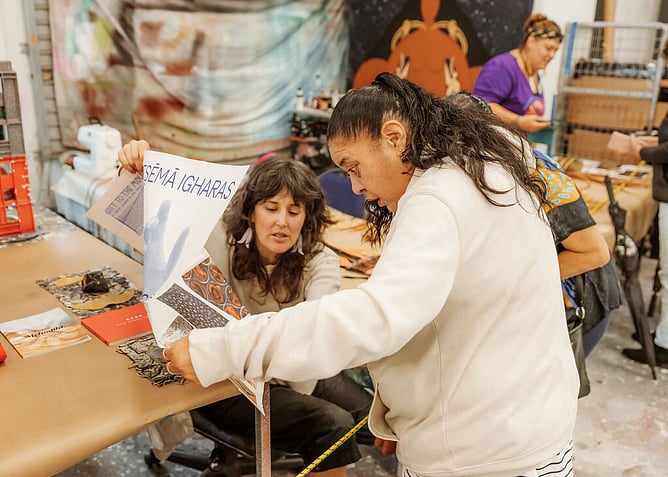
Collaboration is also a natural part of the Gathering where artists share works and add their moko or mark to the work with the intention to gift completed artworks to those who host them. At Te Whare Pora, the house of weaving, artists worked on a large collaborative piece made of muka, aute, tānekaha, beads, and quills. The work passes through many hands, with each person adding their own mauri or life force. Some excel at beading; others bring strengths in whatu or other techniques. Whaea Christina Wirihana speaks of feeling energised; while she is often asked to teach, she sees it more as an exchange rather than instruction. This reciprocal approach is visible everywhere in the Gathering. Together, they push the boundaries of what customary weaving can be and learn from each other to create something entirely new and something that unites indigenous experience.
Adornment artist Denise Wallace (Chugach Sugpiaq) has attended Gatherings across the decades and reflected on the value of the studios:
“Working alongside Wi and Alex helped me to recognize forms that feel universally resonant. Their meanings can be understood across places like Africa, Alaska, and Aotearoa. At the heart of this is a simple truth: we are all people of the earth, shaped by the same natural world from our earliest beginnings”.
Participation in what the studios have to offer has ongoing impact, fueling artistic practice long after the artists return home. This is clearly seen when participants bring artwork to exhibit while the Gathering is on.
WHITI - The Exhibition
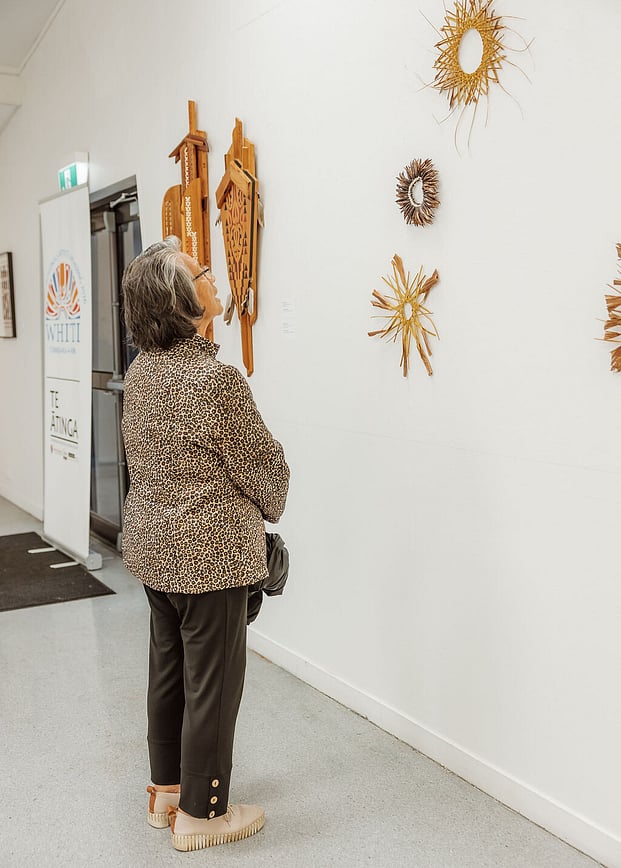
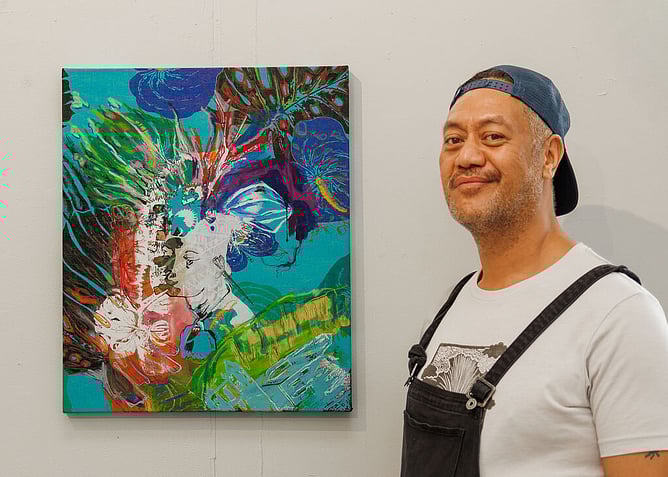
The event’s milestone status was once again celebrated by an extraordinary exhibition. Showcasing artworks bought from home country and mahi made in the early stages of The Gathering, WHITI presented paintings, printmaking, adornment, uku, carvings, weaving, photography and mixed media reflecting both customary techniques and contemporary innovation. Each piece told a story—of whakapapa, land, and identity, —inviting visitors into a deeper understanding of Indigenous perspectives and indicating the exceptional value that The Gathering offers artists.
There is nothing quite like an exhibition opening for ‘The Gathering’. The artists bless their taonga with karakia, waiata, taonga pūoro, chants and drums. It’s a cacophony of sound that builds excitement as a ceremonial walk through across two expansive gallery spaces, takes place.
Curators Aimee Ratana and Erena Koopu (Te Whānau- ā -Apanui) certainly had their work cut out for them as the artworks arrived with the artists, while some works were even created during the days before at The Gathering itself. It was noted that artist Tame Iti (Ngai Tuhoe, Waikato Tainui) and Simon Lardelli (Ngāti Konohi, Rongowhakaata Taranaki) appeared in social media footage working on their pieces just the day before opening! It shows an incredible degree of adept decision making and flexibility to enable over eighty artists to have their ‘moment’ under that kind of pressure. Participant artist Julie Paama-Pangelly (Ngāi Te Rangi) voiced similar appreciation, saying she was, “amazed at what had been achieved in the timeframe”.
Taking a Te Ao Māori approach to the design of the show, the entry feature wall celebrated the ‘Pou’ of Toi Māori. Work created by significant elders including Māori artists Baye Riddell (Ngāti Porou, Te-Whānau-a-Ruataupare), Gabrielle Belz, Sandy Adsett, Steve Gibbs, Derek Lardelli, Randal Leach (Ngāti Konohi), Christina Hūrihia Wirihana and Dempsey Bob.
Many will have seen Dempsey Bob (Tahltan, Tlinget) extraordinary sculpture Raven at Vancouver airport. His work Whale Packer is a small figurative relief sculpture sublimely carved out of alder, almost resembling bone. Acrylic paint is applied sparingly to accentuate features. The Orca is a significant crest for his people, but Bob’s crest is Wolf and this designation is matrilineal, women being wisdom keepers and story tellers. The only other colour is applied to a protruding tongue in the profiled face which alludes to this important power to share cultural narrative. Working very much in customary practice Bob has visited Aotearoa many times since 2001 and says that the ‘Gathering’ continues to motivate and inspire him.
“…both our ancestors did some of the greatest sculptures in the world, of any nation, and what we are trying to do now is get back to that level and it’s not easy.”
Renown elder Sandy Adsett submits a painting that emotes his signature expansive palette. The painting displaying a synthesis between modernism, colour theory and mātauranga Māori, and it is this that encourages us to reflect on and indeed expand the definition of indigenous artist.
Another curatorial intervention that does this is a tuākana/tēina hang, where mentor and student can be seen together. An exciting example is seen in fibre arts on the same wall with elder Christina Hūrihia Wirihana with E Tu Wāhine Mā, a stunning totara and kiekie nod to tukutuku and her past student from Awanuiārangi, Glenda Hape (Ngāti Pukeko, Ngāti Awa, Te Aitanga a Māhaki, Whakatōhea). Her He Taonga made from kiekie, rimu, perspex and glass rods created an evocative woven QR code. Again, a nod to the customary tukutuku panels that celebrate iwi identity and narrative while also visualising the commodification of culture.
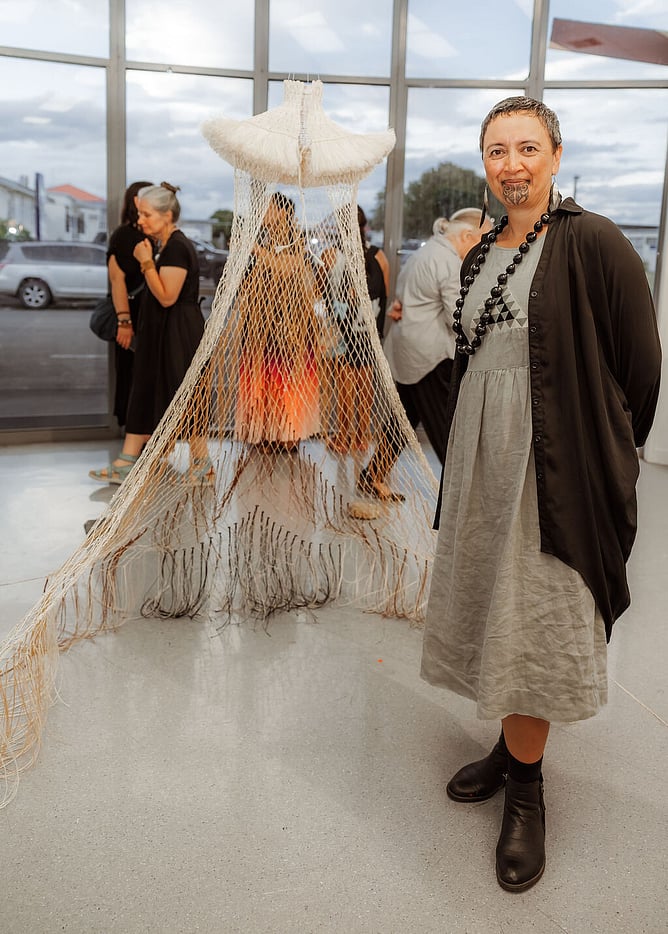
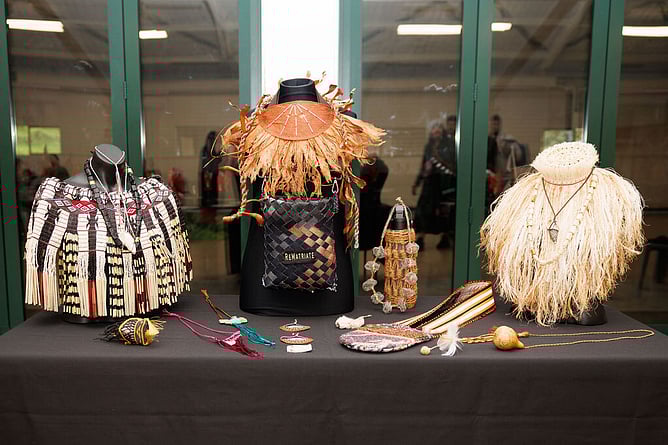
The primary window site on the road frontage of the gallery entrance was gifted to Makareta Jahnke (Ngāpuhi, Ngati Porou, Tainui) for her extraordinary Ipukahurangi originally made for He Aa I Uta, He Aa I Tai-the last National weavers’ exhibition at Te Whare Taonga o Waikato in 2025. Made from muka, a powerful fluted collar speaks to colonial dress, gathering energy in the neck, while the fall sweeps to a large kupenga, a net anchored by several kōhatu or rocks in circular formation. Te Poho o Rua, work by first time attendee Moana Murray (Ngāpuhi) spoke to the influence of master weavers like Jahnke. Her first work woven in muka, and dyed in customary fashion with tānekaha, is a delicate piece anchored by the feathers of a ruru. She is exhilarated to be showing work next to both Jahnke and Hawaiian Marques Hanalei Marzan whose cotton ‘A’ahu kaula shows a dexterity with form and pattern including very different knots that no doubt will have Māori weavers like Matthew McIntyre Wilson (Taranaki, Ngā Mahanga, Titahi) showing his harakeke Hīnaki,fascinated. There are customary fibre works in this exhibition that are exquisitely executed. The aptly named Kim Kahu (Ngaruahine) shows how it’s done with her Taupuhi Aroha. Enticingly draped over a dress form so that you can see every detail of her muka and natural dyed korowai.
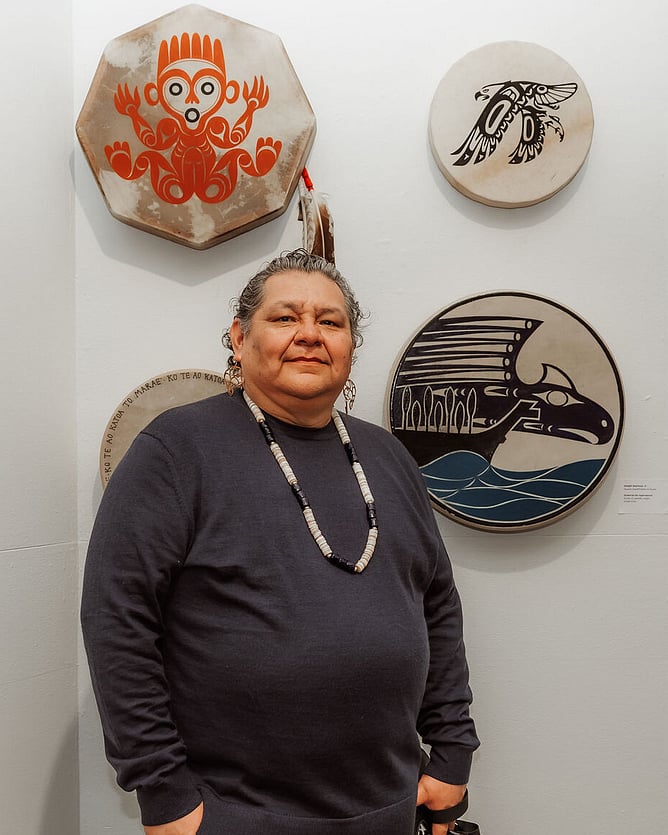
Customary practice also held its own in three-dimensional art forms. Joseph Seymour, Jr (Squaxin Island/ Pueblo of Acoma), showed a series of ceremonial drums made of rawhide and maple. James Webster (Ngati Mahuta, Ngati Maniapoto) showcased his karetao Rangi raua kō Papa, beautifully executed in kauri. Another standout whakairo was from Boydie Te Nahu (Rongomaiwahine) with his large totara Rongomai.
There were many tangible examples of the power of intergenerational knowledge transfer and cultural exchange promoted by the opportunity of the Gathering itself, as artists were excited to try new materials and mediums. One demonstration of this came from Denise Wallace. With pendants carved from walrus tusk and fossil, and silver that were born from collaborative process: uku artist Wi Taepa contributing mangōpare‑inspired forms, Alex Nathan (Te Roroa) assisting with soldering and rivets, and Beau Jack Key of Hawai‘i producing intricate cordage.
There was a LOT of talking about adornment in this exhibition. It was very strong. Lead bone, stone and shell teacher Stacey Gordine provided an exquisite pounamu pendant that was anchored by the forms of two stingray in subtle relief. Young Poutu Puketapu (Ngāti Porou) exhibited a dark stone powerful hei tiki that visitors clustered around, but the real surprise was the astonishing Mother of pearl shell work by young Tahitian artist Herenui Garbutt. A set of wrist finger and pectoral adornments in black lipped oyster shell and wood demanded attention. Anapa reveals layers in the shell, shaped to celebrate its luminescence, the surface at times wriggling with her intensive markings.
One noticeable aspect of WHITI the exhibition, was the unashamed use of colour. This was noted in some exceptional painting. Shane Tuaeu Andrew (Aitutaki, Rarotonga, Cook Islands) seem to be channelling the visual feast of the reef itself with Deities are our Ancestors. This small acrylic, ink and pareu on canvas, packed a punch with both colour and joyful mark making that encouraged close inspection. Likewise, Margaret Aull (Te Rarawa, Ngāti Tūwharetoa, Fiji) had Taumata Atua fizzing off the canvas with exciting colour and joyful fresh mark making. Regan Balzer (Te Arawa, Ngāti Ranginui, Raukawa) employed her extensive chromatic palette in the much more measured acrylic painting Te Whariki Takapou o Hine-Te-Iwaiwa – The birth mat of Hine-te-iwaiwa, illustrating mātauranga attached to this atua wāhine. Colour also united large commanding protest works by two senior artists Tāwera Tahuri with a hand painted chair and large canvas by Donn Ratana (Ngāi Tuhoe). Renowned for their powerful statements and employment of signature indigenous palette, they unashamedly pushed indigenous narratives out into contemporary modes. These works and many others placed by the curators spoke to each other, providing connective comment.
This connectivity—between artists, across generations, and among Indigenous cultures—is central to Whiti. As Te Ātinga Co‑Chair Margaret Aull notes, creative practice is a vital means of perpetuating indigenous knowledge. After thirty years, The Gathering has grown into one of the most significant platforms for Māori and indigenous artists in Aotearoa. The event of the tenth exhibition, occurring in a time of political and environmental strain, was experienced as a reaffirmation of purpose, solidarity and shared artistic lineage.

Further Highlights
PŌWHIRI- Te Poho-o-Rāwiri marae, Ngāti Oneone
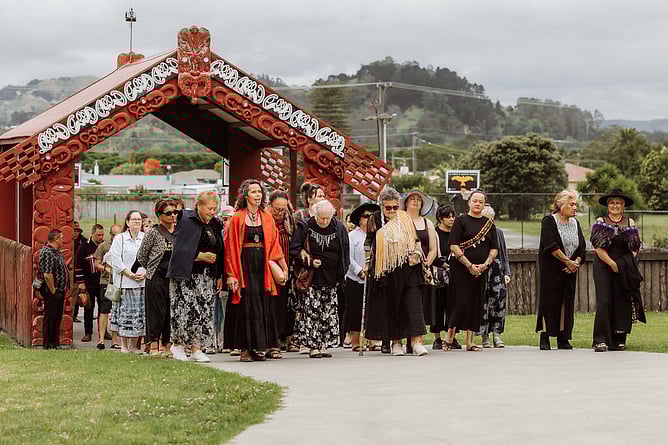
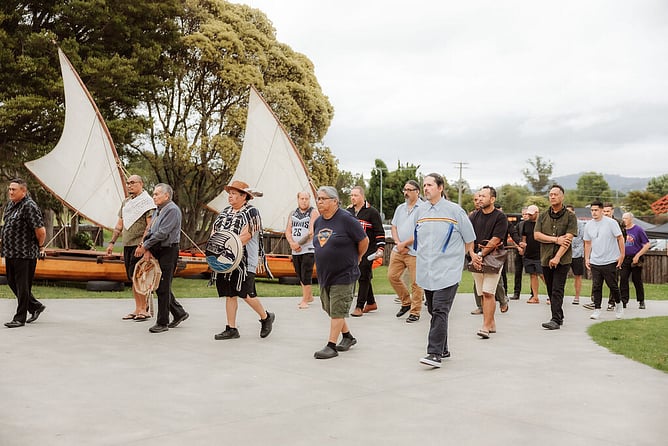
When the manuwhiri or visitors arrive at Te Poho-o-Rāwiri marae, they are brought to the gate, this is their first connection to whenua (land). Here years of forged relationships are reignited. The old and new relationships are brought together. The manuwhiri are encouraged to wear their traditional regalia as a means of identification and celebration of indigeneity.
Marae play a vital role in delivering Gatherings. They ensure that the Gathering and Toi Māori are anchored to pūrakau and tikanga. Where manuwhiri sleep they see toi Māori, sources of inspiration and customary knowledge through whakairo, raranga, and kōwhaiwhai. For any marae hosting a kaupapa like this for an extended time is challenging. Te Poho-o-Rāwiri provided manaakitanga with ease, ensuring all were fed well and looked after for the duration of the Gathering.
Presentations
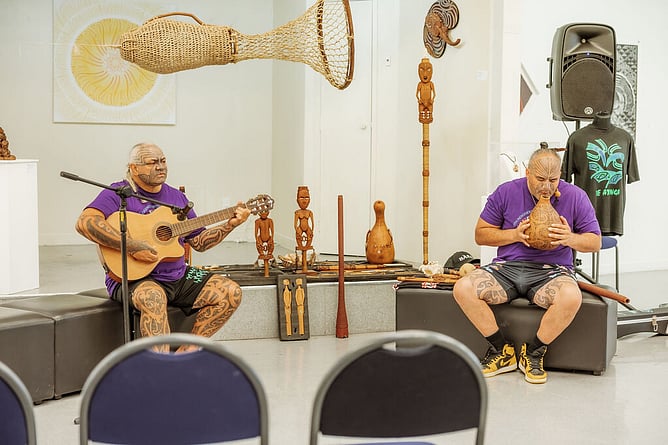
Kutu Kōrero (a tongue-in- cheek title given by artist Donn Ratana) is a series of artists talks held over the week. This meant that artists could contribute to the programme and give back to the kaupapa by presenting their work and their influences to inform and inspire others. All presenters showed recurring themes in their practice or previous exhibitions, including the celebration of their land, whānau, and tūpuna. Throughout The Gathering the presence of Taonga Pūoro (customary Māori musical instruments) was felt and heard as laureate Horomona Horo (Ngāti Porou, Ngāpuhi) ensured that this was a natural part of the hui. It was an emotive means of communication and indigenous frequency that encouraged creative inspiration across the exhibition and maker spaces.
Excursions and Open Day
The operations of the Gathering continue to rely on the generosity of mana whenua—their reo, guidance, and the wairua that holds us. Ki uta ki tai - wrapped around the kaupapa to ensure there is opportunity for manuwhiri to connect with the whenua and visit sites of significance for iwi and hapū.
A morning sunrise double hull waka excursion was provided where international manuwhiri were taken out on to the sea to meet the rising of the sun. Accompanied by tohunga Sir Derek Lardelli the morning dawn karakia provided a unique way to connect in with the te taiao.
Local iwi Te Aitanga -a- Māhaki sponsored two buses to transport manuwhiri to the waterfront of Kaiti Hill where artist Nick Tūpara (Ngāti Oneone) shared kōrero about his large sculptures and the new Te Ikaroa a Rauru walkway bridge. It was a wonderful opportunity to share ‘our faces in our places’ and celebrate the presence of mana whenua again on the whenua. A visit to Rongopai, a customary painted wharenui in Manūtuke had huge impact as manuwhiri likened the experience to visiting the Sistine Chapel!
Te Aitanga -a- Māhaki also sponsored the excursion to Tairāwhiti Museum where an exhibition Kia Ngāwari by local Māori was significant. Many were participating in The Gathering. These intentional moments take another level of organization but importantly provide opportunities for mana whenua to share the depth and richness of their whenua and culture with those participating from around the motu and from overseas.
The Gathering Open Day was as popular as ever. Nearly 100 manuwhiri from across the Tūranga-nui-a-Kiwa community came through to see the ongoing hum of action in the studios and the extraordinary indigenous art in the WHITI exhibition. Despite challenges with unseasonal weather, some travelled as far as Rotorua to come and connect.
Pōngahau Fashion Show and Pō tuku aho gifting
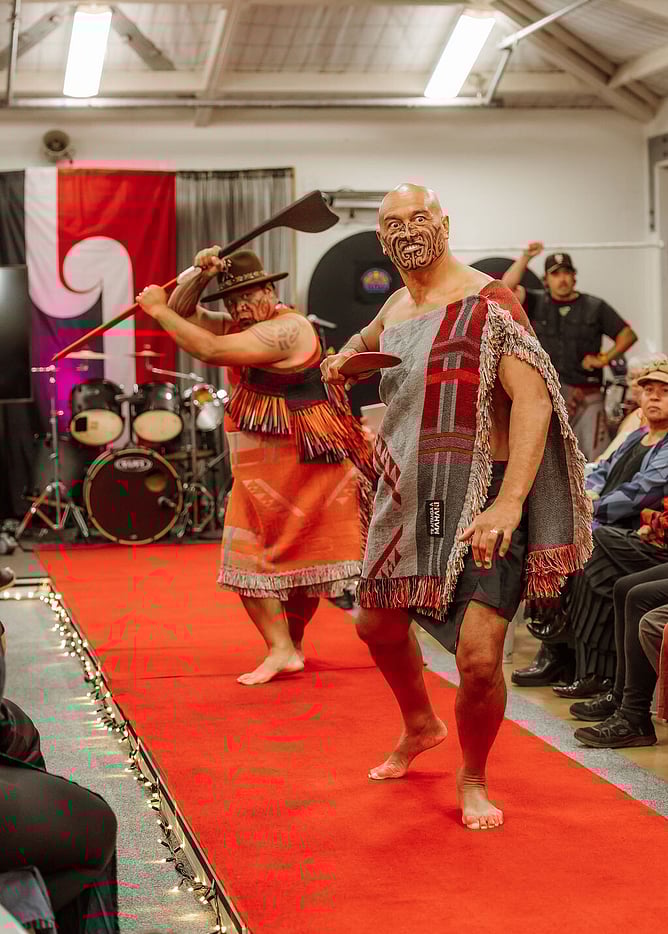
Pōngahau was a visual and sensory celebration at Te Poho-o-Rāwiri marae led by Tāwera and husband Henare Tahuri (Ngāti Kahungunu ki Te Wairoa, Ngāi Tūhoe ki Ruatāhuna). An indigenous fashion show had local artists wear their adornment, kākahu and other works from the exhibition. The wharekai area was transformed into a stage. The inclusion of blankets by the first nations artists was an opportunity to see the various crests and styles. The highlight was seeing the whānau from the kitchen, cousins, aunties coming together to give it a go and walk the red carpet. A highlight was the showcasing of Te Ipukahurangi by Makareta Jahnke (Ngāpuhi, Ngāti Porou, Te Hikutu, Tainui) an intricate muka gown worn by Toihoukura tauira Rihari Campbell – Collier (Ngāi Tai, Te Whakatohea).
Pō tuku aho was a time of reflection and bearing witness to the making and energy of the studios. Studios presented works that were made over the week in different areas showing the collaboration and cross pollination of ideas through various mediums.
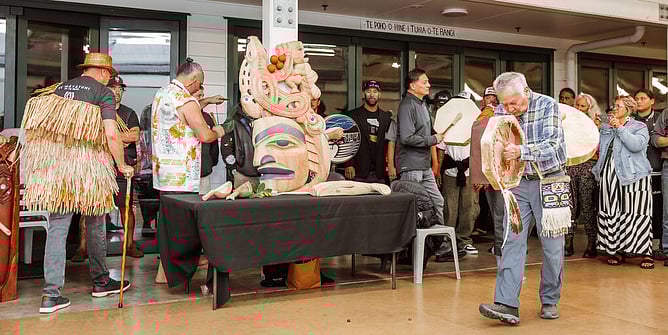
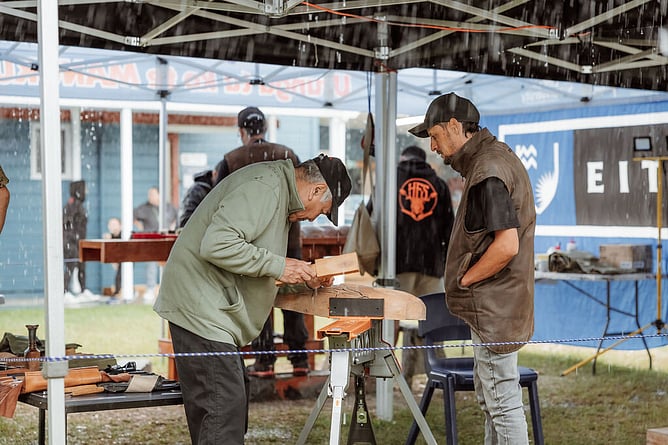
A rock from Titirangi was selected by haukainga artists as a mauri, anchoring eight ribbon threads to each studio group. Here artists and the studio leads were asked to give an overall kōrero and manuwhiri were encouraged to then offer thanks. Gifting by word, thought or artworks is a special part of the Gathering that has evolved over many years. Studios and artists gave koha by way of art and song to the marae, kitchen, Toihoukura and each other. A collaborative carving with a fusion of Māori and Northwest coast design was most appreciated.

Voices from the Gathering
“Whiti, brought the brightest rays of artists to the shores of Tairāwhiti. The magic that was created during this gathering intensified the intentions set forth by our collective ancestors to bring together the fires of our indigenous artists across the globe. The gathering ignited artists to fuel their creations through fellowship, sharing stories and skills, being in community with one another, and supporting the local host culture. Artworks born from this gathering solidified the connections made and the relationships maintained in perpetuity. Mahalo nui, mahalo loa, mahalo pono.” Lehua Waipa Ah Nee (Kānaka Maoli)
“Being amongst familiar faces from Te Tairawhiti, across the motu, and other Indigenous communities was deeply rewarding, while new connections formed into what I hope will be lasting friendships. What stood out most was how Te Ātinga committee and hau kainga o Te Poho-o-Rāwiri held everyone with aroha and grace through exceptional organisation, including healthy lunches at Toihoukura daily, then gathering us each evening to return to the marae for delicious meals. This daily muster, followed by working late into productive nights, created a beautiful rhythm. The artists' presentations, exhibition and opening, haerenga to places of significance, and final night fashion activation all exceeded any expectations.” Dr Natalie Robertson
“Te Ātinga was an awesome experience to share indigenous skills nationally and internationally. Though being considered and expert in my field, it was an awesome experience at Te Whiti to become a student of learning another practice, and another skill in Toi. These types of wānanga are far from few and give awesome opportunity to share our skills to learn new skills from celebrated indigenous Artist from around the globe!” Tiopira Rauna.
“For many, the greatest inspiration is the generosity and dedication of the community. Not all Indigenous communities overseas experience this level of collective participation. After 30 years of attending, artists consistently leave uplifted. Practices evolve over time—stone carving, for example—though learning new techniques but it can feel slow.” Denise Wallace
“The colours of the beads are deeply significant. Learning to stitch with beads and porcupine quills helps identify specific regions and landscapes, much like how whatu uses different resources and techniques to signal where a piece comes from”. Moana Murray
Poroporoaki – Kia Muri -Looking forward
As the 10th Indigenous Art Gathering concluded, with tikanga, kai and the swapping of gifts, organisers looked ahead to the future to continue the connections between artists with the support of Toi Māori. All levels of reconnection at the Gathering foster ongoing international partnerships and develop year-round opportunities for participants.
Whiti, The 10th Indigenous Art Gathering extended beyond the gallery walls, with pop-up events and visits to local marae, schools, and public spaces. These activities fostered a sense of whanaungatanga (kinship) and ensured that manuwhiri plugged into local history and tribal kawa, while community were invited in.
This year’s Gathering was also characterised by a bold engagement with contemporary issues—environmental protection, language revitalisation, and the reclamation of customary practices were recurring motifs. Artists used new materials and digital platforms to reach wider audiences, while staying grounded in tikanga Māori (Māori customs). The fusion of old and new was evident in the collaborative whakairo and raranga unveiled at the poroporoaki. These collaborative works strengthened connections and practices.
The 10th Indigenous Art Gathering in Gisborne affirmed the enduring vitality and innovation of Māori and indigenous art. By celebrating tradition while embracing change, the event offered a powerful vision for artistic growth and cultural renewal. Te Ātinga has proudly recognised our local artists, supporters, community members and international guests who continue to shape New Zealand’s creative landscape—and we collectively look forward to witnessing the ongoing journey.